Mostrando las entradas con la etiqueta adulto. Mostrar todas las entradas

jueves, 30 de diciembre de 2021

Despedida 2021


Una bala al aire no es tradición, es peligro hasta para quien utiliza el arma. Haz la diferencia y no promuevas esta mortal práctica.

Por más inofensivo que parezca, hay ciertos artículos de venta libre que pueden causar daños a la salud. La pirotecnia puede causar quemaduras hasta de tercer grado, intoxicaciones con gases, problemas respiratorios y daños a los oídos o extremidades.

La pirotecnia afecta a personas sensitivas de todas las edades, con condiciones de salud, adultos mayores (envejecientes), mascotas y otros animales en los alrededores donde se utiliza.

Celebra y abraza a tus seres queridos. Que tu celebración no sea la tristeza de otro.


sábado, 22 de septiembre de 2018

Alerta a la ideación suicida en nuestros viejos


Conoce cómo puedes apoyar a tu ser querido con herramientas que pueden salvarle la vida

Hospital Panamericano

09/06/2018

En el 2016, 32 adultos mayores entre las edades de 65 a 79 años se privaron de su vida. Esa cifra aumentó a 62 –casi el doble– para el 2017, según estadísticas del Departamento de Salud.

Y es que, a esa edad, normalmente, los adultos mayores se retiran del trabajo. Después de laborar toda una vida y tener una rutina, de momento se ven sin ella. A esa inestabilidad se suma el sentir que ya no aportan al hogar por tener menos ingresos –si solo dependen del seguro social–. Esta situación puede empeorar si el retirado no trabajó una jubilación. Vienen, entonces, los cuestionamientos sobre qué hacer.

Todos estos factores pueden llevar a una depresión, que a su vez puede llevar a la ideación suicida, planteó Peter González, psicólogo del Hospital Panamericano.
“El nido vacío es otro de factores que causa depresión e ideación suicida en adultos mayores. Los hijos se van a estudiar o se casan y los padres o abuelos en ocasiones se sienten solos”, indicó González.

Otra causa son las complicaciones de salud. A esta edad se requiere mayor atención médica, lo que incluye mayores gastos y, de paso, que las personas puedan sentirse como un estorbo porque no pueden hacer todas las actividades que realizaban antes.

“Básicamente todo se resume en pérdidas: ya sea de trabajo, abandono de los hijos o menor condición física”, enumeró el psicólogo.

Alerta a estos síntomas

González explicó que uno de los síntomas al que se le debe presentar atención es al aislamiento.

“Que la persona ya no quiera hablar o ya no haga invitaciones para comer o compartir; que esté hablando todo el tiempo de que se va a morir; que empiece a regalar sus cosas porque ya no las vas a usar; si deja notas de que dejará de ser un estorbo; si deja de tomarse los medicamentos o si ya no quiere ir al médico; en fin, todo lo que se trate de abandonar el plan de vida es un síntoma de la ideación suicida”, señaló el doctor en Psicología.

A estas señales, la Comisión para la Prevención del Suicidio del Departamento de Salud añade el insomnio crónico, cambios en la personalidad, llanto frecuente y poco apetito.
Cómo ayudar a nuestros adultos mayores
Una vez se identifiquen estos síntomas, “lo primero es hablar con ellos”, sostuvo el psicólogo.

El experto recomendó visitarlos frecuentemente para que no se sientan solos, llevarlos a pasear para que se distraigan e invitarlos a comer. Todas estas actividades pueden motivarlos y demostrarles que la vida continúa y pueden seguir disfrutando de ella.
Otra de las recomendaciones es involucrarlos en actividades como preparar la cena para que se sientan parte de la familia y acompañarlos a la iglesia u otras actividades.

Por su parte, la Comisión para la Prevención del Suicidio indica que es importante no juzgarlos ni regañarlos, validar sus sentimientos y dejarles saber que quieren ayudarle. Asimismo, la Asociación Americana de Psicologíaaconseja recordarle al adulto mayor que, aunque no lo parezca, la situación por la que está pasando es temporal.
Si estas alternativas no funcionan y el paciente trata de hacerse daño o agredir a otra persona, para evitar los riesgos hay que considerar una hospitalización, aseguró González.

“También se puede trabajar con un programa parcial, en el que la persona asiste medio día al hospital y recibe ayuda de psicólogos y trabajadores sociales, quienes les ofrecen terapias ocupaciones, en grupo e individuales, donde se trabaja con la situación específica que llevó a la depresión y luego regresan a su hogar”, agregó.

Además, motivarlos para que participen de reuniones, actividades y grupos de la tercera edad, como clubs de oro, donde pueden compartir con otras personas y sentirse útiles es otra de las sugerencias. Pero es necesario que los hijos, familiares y vecinos estén dispuestos a transportarlos y apoyarlos.
Finalmente, lo primordial es demostrarles amor, enfatizó González.

Tomado de:  http://m.primerahora.com/brandshare/hospital-panamericano/nota/alertaalaideacionsuicidaennuestrosviejos-1301097/ el sábado, 22 de septiembre de 2018.

sábado, 1 de abril de 2017

Voluntariado en vacaciones: el reto

Activists on Vacation: 300 Dogs in the Tropics

What happens when activists go on vacation? Do they retreat to turquoise waters and white sand and bask in the sun? Yes! Do they try to meet as many change-makers as possible in hopes of finding inspiration and motivation? Absolutely!
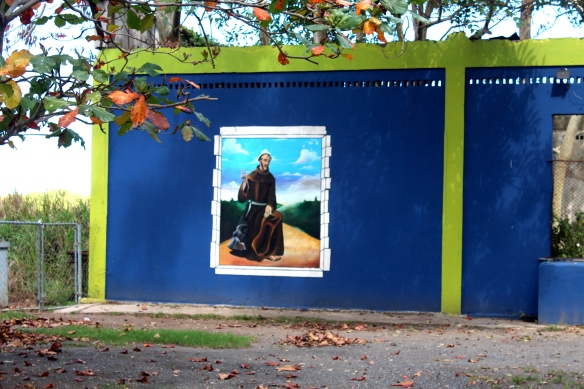
Santuario San Francisco de Asís. Cabo Rojo. Puerto Rico.
We visited Puerto Rico a few weeks ago and among other marvelous things, we volunteered at Santuario de Animales San Francisco de Asis. There we met with change maker Dellymar Bernal, who along with her team leads the animal sanctuary in Cabo Rojo, Puerto Rico, with 300+ dogs and cats. They rescue, provide vet care, find them forever homes, lead educational efforts in favor of spay/neuter and general kindness to animals, and advocate on their behalf. Dellymar is a librarian at a local university, a vegan, and an example of someone who is guided by her unwavering principles and her burning desire for change.
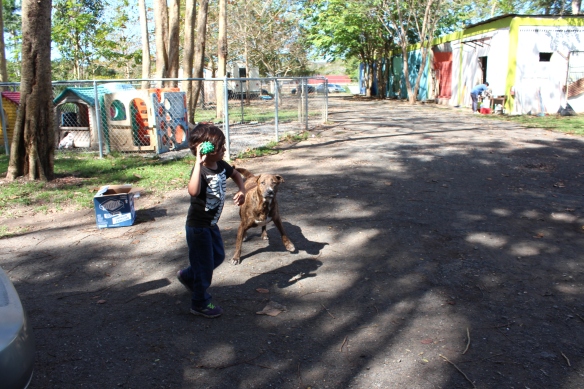
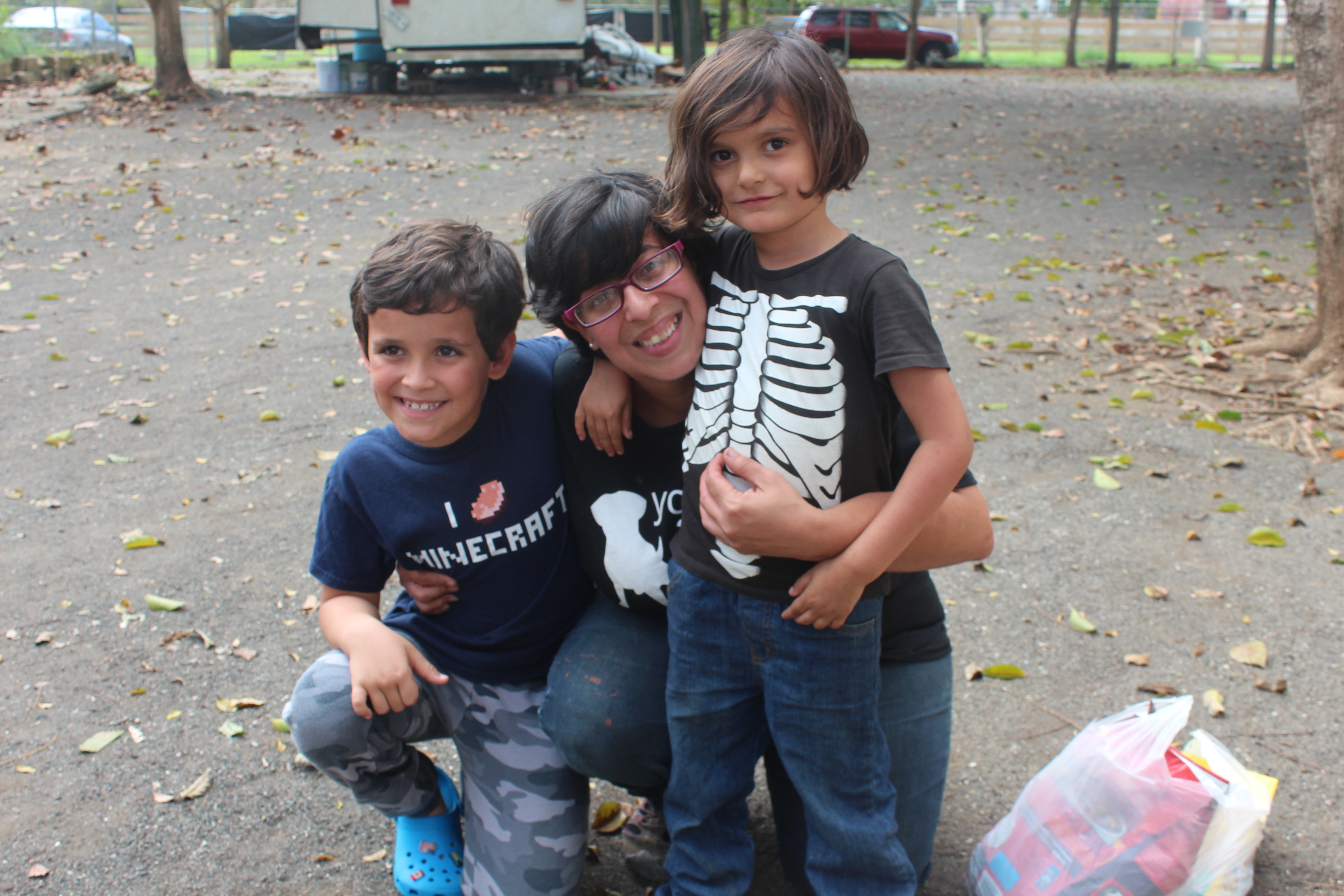
aov5We scheduled an appointment on Sunday at 8am, and as we approached the gate, the Welcome Committee greeted us with barks and tail wags. A crowd of about fifteen other volunteers waited outside with us, young people mostly. Dellymar gave us a tour and a rundown of the rules and we were split into work teams. Ollie and I were placed in the senior team, and we started off with great steam. Divided by areas, the dogs were fed, then let out unto the socialization areas while their cages were cleaned. Some of the senior kennels have beds (which they are still in need of), and all got some love.
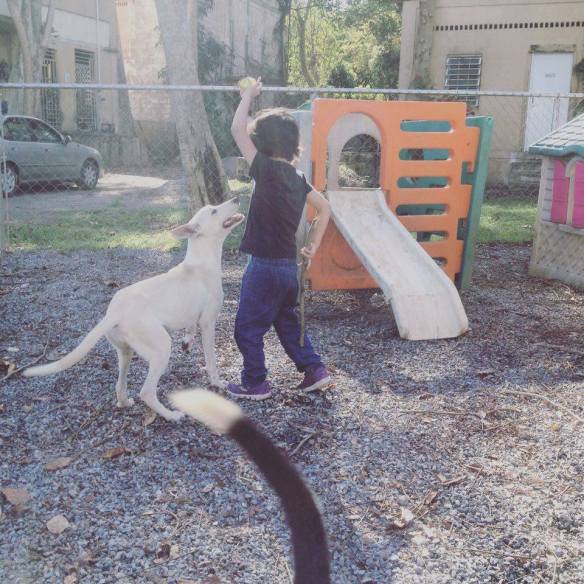
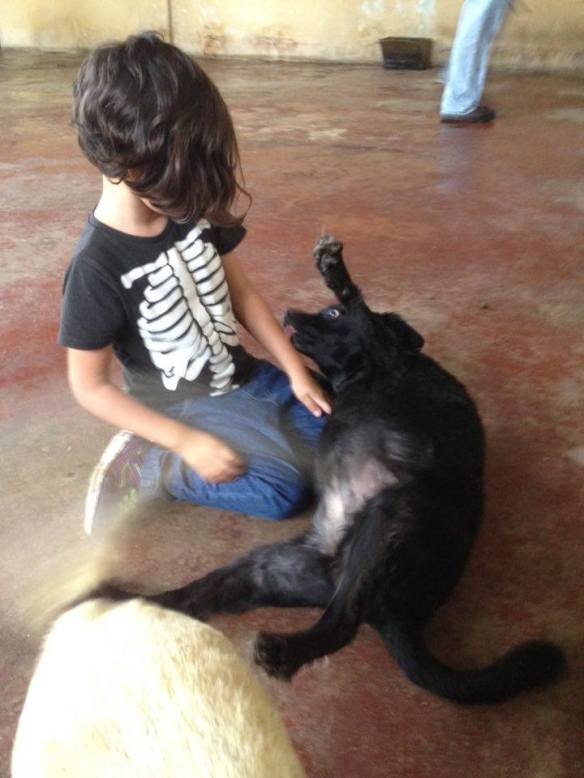
aov8Ollie was placed in the “Sobeteo” Department (which literally means rubbing). His task was to play, socialize, and give the dogs some loving as their cages were cleaned. He took his job seriously and played endlessly. He also participated briefly in the SASFA Reading Kids program, which encourages kids to read to the dogs. This serves a dual purpose: it empowers kids’ reading skills and soothes dogs with the rhythm of kid books.
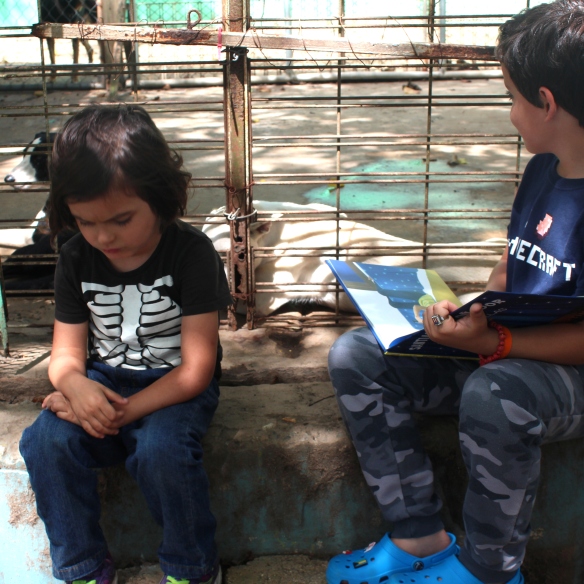
Sasfa Kids Reading Program
The Sanctuary has teams of volunteers that lead the programs. In the words of Dellymar,
“At SASFAPR, we have different programs. The first one is community education on Law 154 for Animal Welfare and Protection, responsible pet guardianship, the importance of spaying and neutering, and adoption. We also have physical adoption programs in PR and the US (called Alas de Amor (“Wings of Love”) in partnership with other organizations), long-distance adoption for those people who can’t have a pet due to time and space reasons, and temporary foster homes. Another important program is our Internship program with the RUM (University of Puerto Rico- Mayaguez Campus) specifically with the Agriculture Faculty, the Department of Animal Science, and volunteering, in which young people learn through service. This year we established a partnership with the International Humane Society and Animal Medical Hospital to start a low- cost spay and neuter campaign; we are very excited, since we will be able to save thousands of lives.”
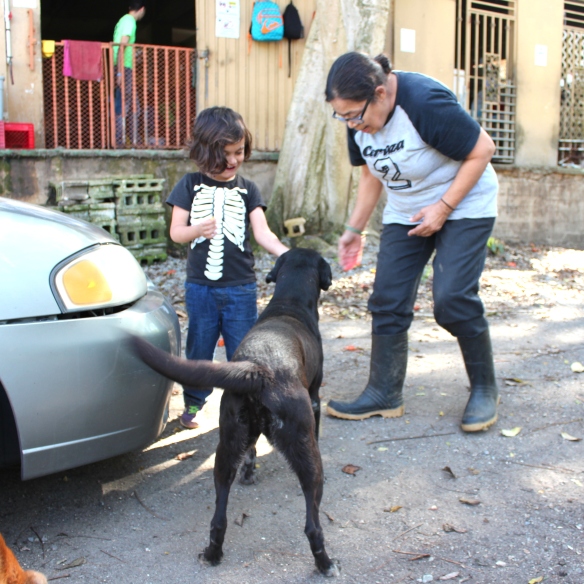
aov6
Madeline, the Sanctuary’s Founder and Ollie give the dog treats.
Madeline Martinez founded the Sanctuary in 2007. She spotted some abandoned buildings by the side of the road and decided to use them. The buildings belong to the University of Puerto Rico, Mayaguez Campus. They agreed to allow her use of the space and signed a contract. Madeline started the project, and her daughter, Dellymar runs it. In the beginning, the team cleaned up the buildings and have slowly improved the structures, built the kennels, added an office space and a recreation area for dogs, and a fresh coat of paint for many areas. They do not have electric power (they have a generator) or running water (they pay for water tanks), but what they lack in resources, they have in commitment.
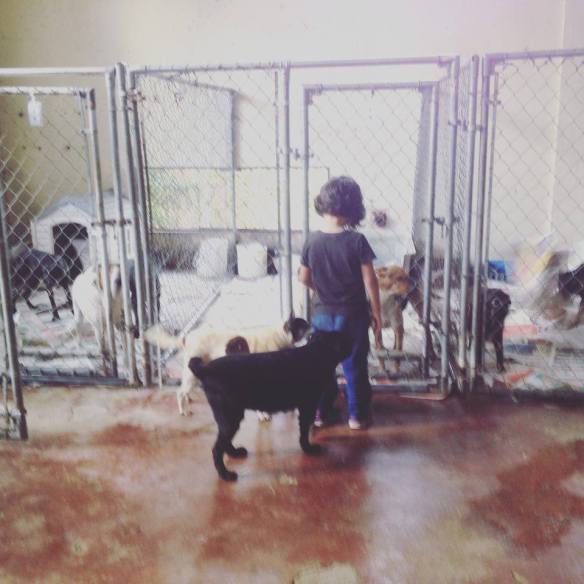
Aov13The Sanctuary depends on individual donations to care for the 300+ dogs and cats, veterinary bills for all of them, travel costs for some shipped to the US for adoption through collaboration with Bide-a-Wee and Stray from the Heart among others. There are no government funds available for their work.
aov11
I was very impressed with the education work that they lead, and I asked her how that aspect of the Sanctuary came to be. How did the idea evolve from just rescuing animals to establishing an education program?
From the first moment the Sanctuary was organized, we included community education as part of our mission. We understand that if we don’t go beyond the four walls of the Sanctuary to educate on these important issues of animal abuse, abandonment, and uncontrolled reproduction of animals, the problem will worsen. It is one of the pillars of our organization. At this time, almost 8 years after our formal incorporation, I can attest that we have impacted close to 5 thousand students, and if each of them in that workshop learned about animal protection laws, about spaying, neutering, and adoption, we have taken a great step towards our vision: “To build a compassionate, sensible, conscious community where the life and rights of animals are respected.”
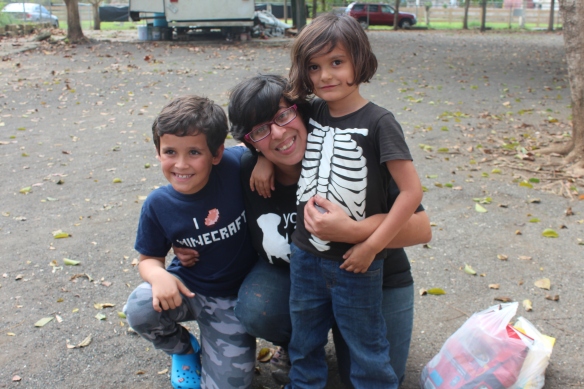
Dellymar and Sasfa Kids
A vegan, Dellymar has been able to speak about compassion for all species, and they intervened once in the rescue of a cow stuck in mud. She says:
“Veganism was for me the next step after 18 years of vegetarianism, it is the consistency in putting into practice what I preach about animal welfare. We have grown up within a culture where as kids we are brainwashed that for the meal to be complete, there had to be a piece of meat in it, where milk is something basic in our shopping list, and breaking with tradition is still a great challenge. Fortunately, there is a vegan movement throughout the island that helps in having variety when you eat out and what you find in supermarkets. In spite of this, even to people close to you, you have to explain them what veganism means; that it is a commitment to animals, to yourself and to the planet. It is odd that we have to explain and even justify the idea to people who don’t know much about the movement, but it also becomes an opportunity to educate the double standard within the animal welfare movement in PR defending domestic animals while they devour a meat dish. I believe that we are heading to open new opportunities to spread this message on veganism and ethical decisions.”
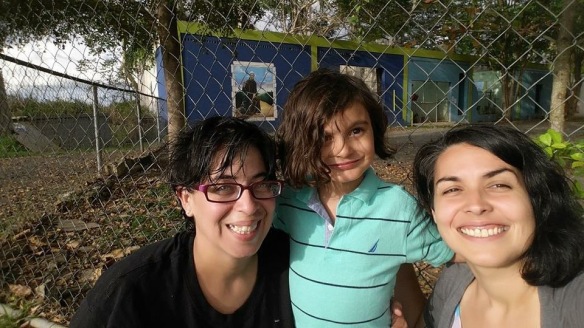
aov15When I meet other change-makers, I always want to know what makes them that way. I am curious what sparks led to that ignition of determination. I asked Dellymar where her love of animals came from, what makes her want to change the world.
 “The love for animals started when I was in my mother’s belly, when my mother was pregnant and slept with 15 cats and my first word was the name of my cat, so that is in my genes. I always saw how my mom rescued and helped animals within her possibilities and I helped her as a child. I started to be active in 2007 and since then it has been a process of finding my purpose. One of my mottos is “Be the change you wish to see in the world.” It is a commitment at all levels. I constantly mention that our country and our world need people committed at all levels, since they are the ones who will change the world. It is because of this that every decision I make goes through the filter of, was it tested on animals? Does it have animal products? The use of language so as not to belittle or perpetuate speciesism. Thanks to them [animals], I have reconnected with my humanity, they have been my greatest teachers on compassion, solidarity, loyalty, love, and in their eyes I find hope and the strength to carry on. I am eternally grateful since in these years of activism I have found marvelous people that become my extended family, like Ollie, Karen, and you.”
aov9
Ollie worked hard in the Sobeteo Department, rubbing bellies and giving lots of love.
Ollie loved the experience and so did I. I marvel at the impossible that they have created. From unused space, abandoned buildings, drug dens, to a space filled with life, filled with hope, filled with love. This woman has gathered a team around her; her commitment is such that she inspires greatness and commitment in others. She is so amazing and so humble and so understanding and so loving, and you can breathe all this in every space of the Sanctuary. You can breathe the love.
We never take a vacation from ourselves, so we carry our activism with us. I love meeting other change-makers, people making a difference in the world, seeing their projects first hand, letting ourselves be inspired by their courage and determination. Together we build a kinder, just, more compassionate world, even on our spare time.  Volunteering with our children while on vacation also teaches them that changing the world is fun! Lending our hands is not a sacrifice, it’s a privilege, it’s our duty! And it expands our heart and gives us purpose and a family in the new friends we make.
The Sanctuary is living proof of what can happen when we act together, when we want the world to change, when we care about change, when we persevere, against all odds, for something bigger than us, an opportunity to make the world a better place. It certainly is a better place for the 300 dogs that now have a second chance at life.
To help them carry on their labor of love, you may donate here: http://sasfapr.org/
In the Sanctuary, you breathe love.
NOTE: Writing this post, experiencing this Volunteering Day at Sasfapr inspired me to dream, led me to a vision which I have since wholeheartedly embraced and which I am working to bring to reality. I am very excited to launch it through this particular post. Thank you Sasfapr and Dellymar for your time, for your friendship, for all your work in carving out this piece of heaven on earth, and for unearthing this dream of mine. Folks please find my ambitious new project, Activists on Vacation and let me know what you think!

Tomado de: https://granolatron.com/2016/04/01/activists-on-vacation-300-dogs-in-the-tropics/ el sábado, 1 de abril de 2017.

miércoles, 15 de marzo de 2017

Biblioteca Antonio A. Roig de Humacao

Nuevo Horario en la Biblioteca Antonio A. Roig de Humacao


(Humacao, P.R. martes, 14 de marzo de 2017) –La Biblioteca Antonio A. Roig, cuenta con nuevo horario de servicio a nuestros estudiantes desde el 1ero de marzo de 2017. “Nuestros estudiantes en su mayoria salen de las escuelas después de las 2:30 p.m. y la jornada regular de trabajo de sus padres culmina más o menos a las 4:00 p.m., entonces existe la necesidad de tener horario extendido comenzando a las 6:00 a.m. hasta las 7:00 p.m. para y poder brindar el servicio nuestra gente de Humacao, muy en especial a las familias de bajos recursos económicos” indicó el Primer Ejecutivo, Trujillo Panisse.

Como dato histórico la Biblioteca Antonio A. Roig está ubicada en la calle Domingo Quijano, en la parte posterior de la Concatedral del Dulce Nombre de Jesús, en un edificio construido para el 1948, donado por Don Antonio Agripino Roig. La biblioteca ofrece servicio a poblaciones de todas las edades y las facilidades compuesta laboratorio de computadora, área de referencia, área Juvenil, el rincón de la lectura y colección puertorriqueña. Los números telefónicos son, el (787) 285-8422, (787) 850-6446 o (787) 850-6440.

Tomado de: https://m.facebook.com/notes/municipio-aut%C3%B3nomo-de-humacao/nuevo-horario-en-la-biblioteca-antonio-a-roig-de-humacao/1252862364749704/ el martes, 14 de marzo de 2017.

jueves, 9 de febrero de 2017

Navegando Seguro por el Internet

Dada la importancia de mantener protegidos y seguros a nuestros estudiantes, el jueves, 9 de febrero de 2017 se ofreció a toda la comunidad escolar la orientación "Navegando seguro por el internet". Nuestro conferenciante fue Elio González del Proyecto Diktya. Con diversas estrategias (videos, presentaciones e investigaciones) cautivó a más de 500 personas exponiendo temas de gran importancia para la prevención y la seguridad de los estudiantes: depredadores sexuales, extorsión sexual, pornografía infantil, sexting, acoso cibernético, entre otros. Gracias Elio, por tu compromiso con la niñez y la juventud de Puerto Rico.

Dale "me gusta" a la página del Proyecto Diktya para que te mantengas informado de la prevención y la seguridad en las redes.


domingo, 25 de diciembre de 2016

Reflexionando sobre los ancianos en esta época navideña


Un abuelo despierta y empieza un nuevo día. No expresa motivación por algún sueño, ni alguna emoción por algo interesante en esta jornada; ni nada por el estilo. No se sabe si tiene o tuvo familia. No se lo muestra acompañado de ninguna persona, excepto de Blobby, un misterioso compañero (como se puede ver y el significado de su nombre en inglés lo sugiere) que es una especie de masa extraña. La masa simboliza lo indeterminado. En este caso permite un amplio abanico de interpretaciones posibles, de hecho esta ha sido la suerte de este cortometraje, realizado por la experta animadora canadiense Laura Stewart. Pese a lo corto y sencillo que es, ha recibido varios premios e interpretaciones en diversos festivales.

Blobby podría ser la personificación del recuerdo de alguien especial que ya no está. Alguna persona cuyos hábitos matutinos, como tirar de la cadena mientras el otro se duchaba o ser poco cuidadoso con lo que se bebía en la mesa, podrían haber solido incomodar al anciano, pero cuyo cariño y recuerdo es tan fuerte, que él estaría dispuesto a volver a soportarlo todo con tal de recuperar algo de su presencia. O tal vez Blobby sea la soledad misma. Paradójica realidad generada por ausencias, pero que puede llegar a constituir o verse como un tipo de presencia.

Dentro de la ambigüedad de los posibles significados presentes en el cortometraje, se pueden percibir verdades innegables. Una podría ser expresada así: del amor nace el color de la vida. En el breve momento en que el anciano decide interactuar con su misterioso compañero, compartiéndole un bocado de su desayuno, se suscita un ambiente alegre que se expresa en un baile entre sonidos y colores. Pero de pronto todo termina, como un espectáculo de estrellas fugaces, como el fin de un sueño al despertar y enfrentar la realidad de la vida. Dura realidad que el anciano expresa en su cansado y nostálgico suspiro. Blobby se va y el anciano lo recuerda haciendo una figura suya con la comida de su plato.

«Verdaderamente la vejez tantas veces es un poco fea, ¡eh! -exclamaba el Papa Francisco en una homilía- por las enfermedades que trae y todo esto, pero la sabiduría que tienen nuestros abuelos es la herencia que nosotros debemos recibir. Un pueblo que no custodia a los abuelos, un pueblo que no respeta a los abuelos, no tiene futuro, porque no tiene memoria, ha perdido la memoria. (…) nos hará bien– comentó hacia el final de su homilía – pensar en tantos ancianos y ancianas, tantos que están en casas para ancianos, y también en tantos – es fea la palabra, pero digámosla – abandonados por sus familiares. Son el tesoro de nuestra sociedad».

Este video nos sensibiliza a todos con la realidad la vejez, aquella realidad que nos espera a todos. Nos ayuda a saber valorar y apreciar los diversos dones, como la salud y las amistades, y nos lleva a recordar que nuestra caridad se tiene que vivir especialmente con los más frágiles y necesitados.

¿Cómo nos relacionamos con nuestros abuelos?


Tomado y adaptado de: http://catholic-link.com/2016/09/27/video-corto-animado-soledad-abuelos/ el domingo, 6 de noviembre de 2016

sábado, 22 de octubre de 2016

Inglés conversacional para mayores de 16 años

Aprovecha esta oportunidad para el curso de inglés conversacional; grupo pequeño. La matrícula termina martes, 25 de octubre de 2016. Detalles en la promoción oficial.